A traffic guardrail is one of the safety installations along roads, highways, and urban streets. It helps protect vehicles from crossing on the opposite lanes, running off the road, or crashing into roadside barriers. Impact guard rails protect vehicles occupants from roadside barriers but can be damaged. The ease of recovery of road repairs, recovery of traffic, and safety of roads is determined by how quickly and efficiently guard rails can be replaced. Each party involved from the road management department and construction teams to vehicle owners involved in an accident need to know how easy it is to replace a guardrail and the factors determining that ease. This will allow them to make better decisions for guardrail replacements and for post accident situations.
The ease of guard rail replacement is dependent on structural design and how the components fit together. For one, modular assembly is a fundamental design feature. The best quality guard rails utilize a modular design approach, where the guard rail panel, the post, and the connecting pieces are all standalone components.
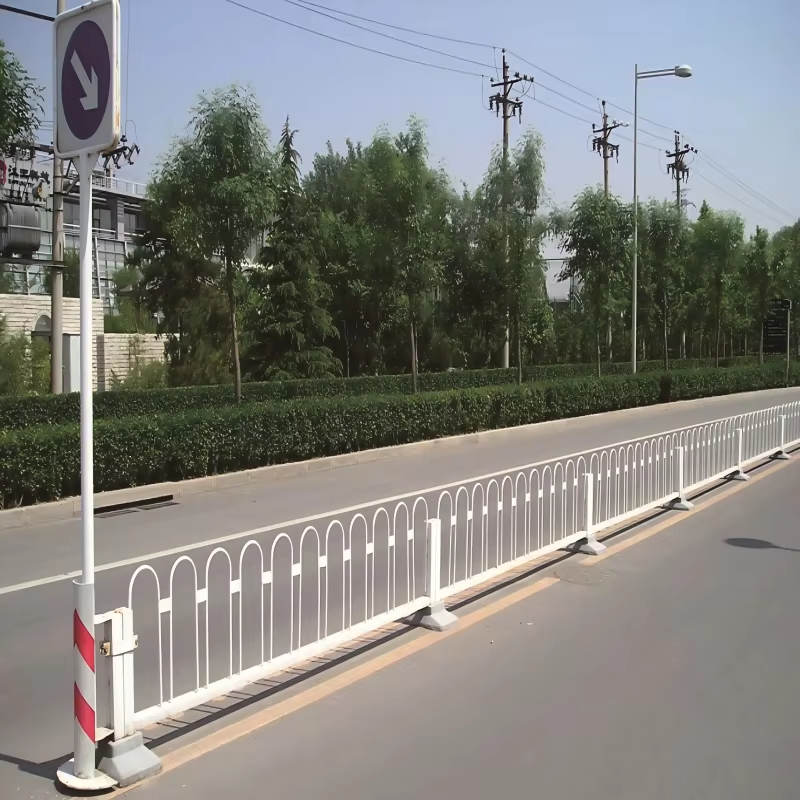
This means only the damaged module such as a guardrail panel or a post needs replacing after a collision instead of all the guardrails in that section. This minimizes material waste and expedites the replacement process. Secondly, the use of standardized connectors promotes ease of use. Traffic guardrails with standardized bolts, clamps, or snap-in connectors can be quickly taken apart and fastened back together again with ordinary tools. Replacement teams can quickly acquire and install new parts, as opposed to custom connectors needing special tools or parts. Third, the use of lightweight yet durable base materials is helpful. Most modern traffic guardrails have a base of galvanized steel or aluminum alloys. This means they can endure the force of a few workers without the aid of heavy machinery. Most importantly, the materials can withstand the force of a collision and aid in the ease of on-site replacement.
After a collision, the replacement process of a traffic guardrail is usually simple and effective, as long as the guardrail has been designed well. This process consists of several key steps, which are designed.. First, on-site assessment and safety preparation.
When an accident happens and road maintenance begins, the first thing the road management team does is set out cones, warning signs, and other safety barricades. This is to provide and signal a protected area to all passerby’s, the road replacement workers, and other vehicles. They then check the traffic guardrail to see what parts are broken. This means checking the panels, posts, and even connectors to see what is damaged, and looking if there is any hidden damage to the foundation. After this, they begin disassembling the damaged guardrail. They check and remove other damaged parts using only basic tools like wrenches and pliers. For modular guardrails, this involves unscrewing bolts or releasing clamps to remove damaged panels. The damaged parts are then taken away from the area that is to be repaired to avoid interfering with traffic. For installing new components, workers install new guardrail components to the posts which are aligned to the existing parts. They ensure the new components are aligned with the existing traffic guardrail to maintain a smooth and continuous barrier. After this, the team does a safety check on the guardrail and alignment. Finally, they remove any cleaning and safety barricades set out and allow the traffic to flow again.
Dislocated entail a standard response time of 1–3 hours closure regardless of the type of dislocated entail a standard response time of 1–3 hours closure.
Well-designed and uncomplicated traffic guardrails can easily be replaced, but some issues can make the replacement a little more complicated. First, non-standard/ Outdated designs. Replacements and adjustments made to traffic guardrails and custom-built components, end up custom building traffic guardrails, which can result in non-standardized components, like non-standard bolts, or connections that are welded instead of made detachable which are time-consuming to remove. This leads to disassembling needing cutting or grinding, ultimately taking much more time. Second, severe foundation damage. When a driver hits a guardrail post and foundation below is damaged, whether it’s bent or broken steel bars and in need of new concrete, it is time-consuming to remove and rebuild the foundation work before installing the new posts. This task alone requires the concrete to cure which can result in days of wait. Third, harsh weather or environmental conditions. When replacing a traffic guardrail, heavy rain and snow slow down the work but most importantly are high safety threats to workers due to strong winds.
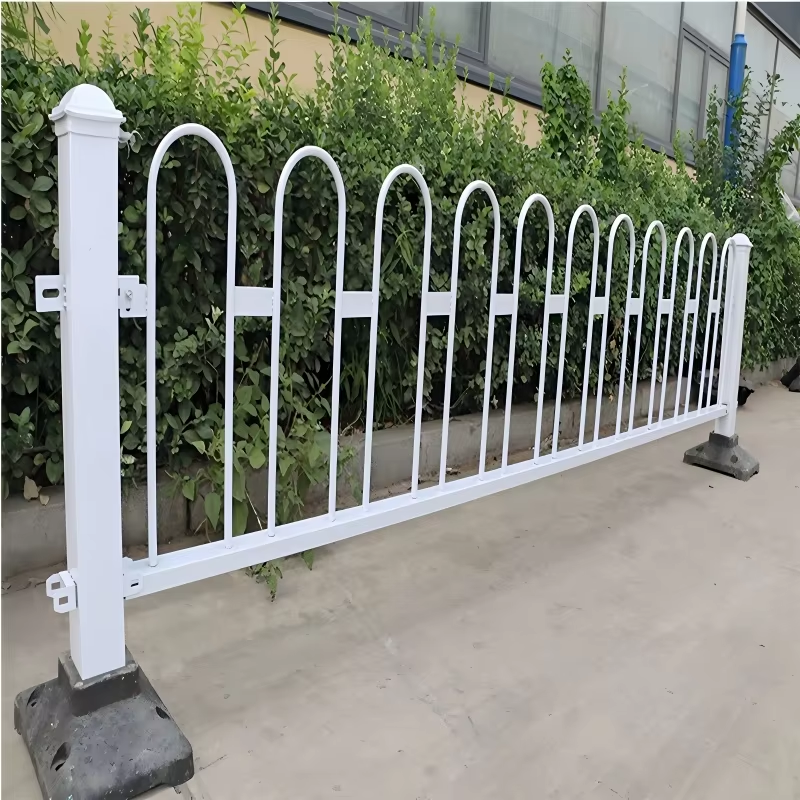
During extremely cold winters, it may be difficult to dig to repair foundations, or it may take longer to cure concrete. Furthermore, there may be logistical issues when it comes to replacing traffic guardrails in remote mountainous regions or busy urban intersections. These may include the difficulty of replacing the guardrails due to coordinating with traffic police to schedule road closures.
For road management departments and the entire transport system, there are considerable benefits to having easy-to-replace traffic guardrails. To begin with, it minimizes traffic disruption. Quick traffic guardrail replacements mean the road section can be opened to traffic and any traffic buildup can be avoided. The risks of secondary accidents, which are caused by road closures, can also be avoided. In urban areas, the busy highways and arterials save time and prevent delays for large numbers of commuters. Easy-to-replace traffic guardrails also lower maintenance costs. There is also no need to replace the entire guardrail system, which further reduces material costs.
As time passes, the savings really do add up, particularly in high traffic road networks where collisions with traffic guardrails become frequent. As time passes, the savings really do add up, particularly in high traffic road networks where collisions with traffic guardrails become frequent. The second added value is savings. Replacing damaged traffic guardrails in a timely manner decreases the risk of road incidents significantly, therefore increases road safety. A damaged traffic guardrail cannot effectively protect vehicles or pedestrians. Plain to see, a damaged traffic guardrail has the potential to expose vehicles, pedestrians, or even both to grave danger. Quick replacement processes also minimize the risk of road works exposure to passing traffic, significantly improving safety on site.
When selecting a traffic guardrail that caters to ideal replaceability, it is important to target particular design and performance characteristics to assure convenience in long term upkeep. First, choose traffic guardrails that exhibit modular and standardized designs. This would entail selecting traffic guardrail options that possess clearly defined modular constituents that align with the standards set in the industry. Inquiring with a supplier on part availability for replacement components, and if interchangeable mechanisms and tools are used to set up and take down the guardrails, would aid in the decision. Steer clear of traffic guardrails that come with custom or proprietary constituents to avoid replacement challenges. The second design feature to consider is the guardrail material's durability, and lightweight properties.
Select traffic guardrails made from *corrosion resistant materials*, such as hot dip galvanized steel or *aluminum alloys*. Both are cost efficient since they are lightweight to lower shipping costs and durable to reduce the rate of replacements. *Aside from durability*, materials must be capable of absorbing impact forces and must be lightweight enough to not require cranes for replacements. *Cost effective systems* guardrails require the least maintenance and are supplied along with effective installation systems. Reliable traffic guard suppliers deliver required replacement equipment on time along with instruction manuals and are willing to provide on site installation support. *This is primarily* to reduce time to install as most suppliers do not provide instruction manuals. Get references from other road management departments and ask about the traffic guard replaced systems in order to learn more about the guard systems. Finally, it is important to consider the *expandability* of the traffic guard systems. replacing or expanding guards to adjust to the road design saves time and cost.
Copyright © 2025 by Chongqing Zhengda Steel Structure Co., Ltd. - Privacy policy

 EN
EN