
 EN
EN


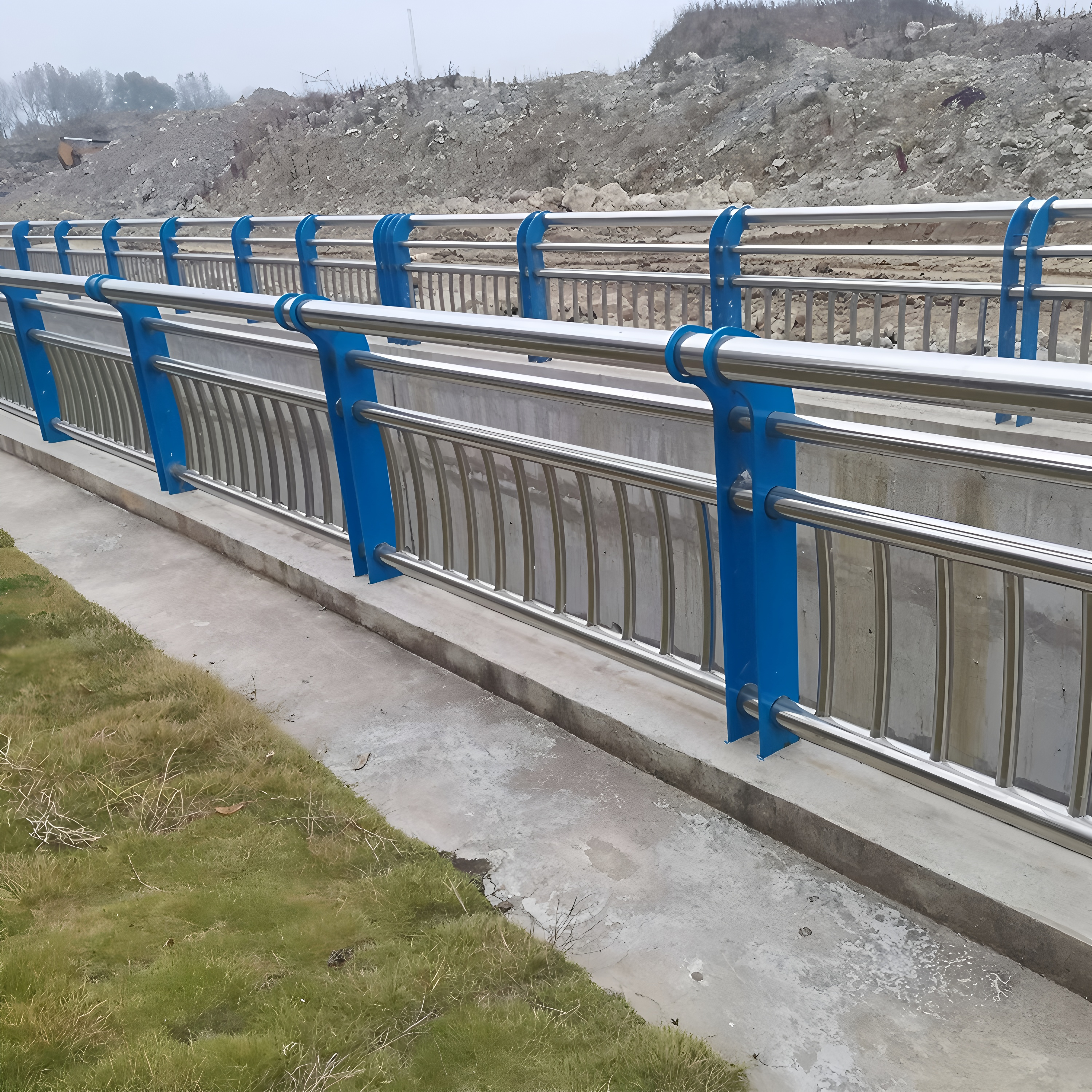
Static load ratings for bridge collision barriers simply tell you what they are able to handle when everything is perfect. When an actual collision occurs everything is different because of the different types of stress and loads that are encountered that change the impact and stress distribution on the structural member. When a car collides with a bridge collision barrier the car will create a peak load of 3 to 5 times the amount of load that is stated in the static load ratings. Peak load is a result of the automobile's velocity, mass and impact angle. Collison Concrete barriers are designed to absorb collison energy. They do this by crushing in pre-determined and predictable ways. No static test will ever show this. Even though a barrier meets the kN (kilo Newtons) requirements, barriers can still collapse in a collision. Barriers will collapse when struck by fully loaded and extremely heavy trucks (over 36 tons). This is the reason why crash test data is more important to engineers than arbitrary numbers found in the specs. This is the true value of test data. It will tell you how safe the structure truly is.
Metric Application Dynamic Adjustment Factor
Peak Impact Instantaneous collision force 3.5× static rating
ESF Design equivalence 1:1 static comparison
Residual Load Post-impact structural integrity ≤70% initial capacity
This framework ensures that the barriers retain their functionality after the impact, and the design absorbs the required impact energy. But the actual performance is a function of reinforcement, concrete quality, and foundation anchorage.

Crash Test Standards for Bridge Collision Barrier Performance
MASH-2016 TL-4 Standards for Heavy-Vehicle Impact Resistance
Crash barriers on bridges are regulated by the MASH-2016 TL-4 standard which makes them able to handle impacts from 36,000 kg vehicles traveling at 80 km/h. What separates TL-4 from standard tests? Unlike standard tests, TL-4 does crash tests at multiple impact angles, including one where a vehicle strikes the barrier at 15 degrees off center. Barriers must be able to contain and redirect vehicles, maintain occupant forces at 20g or less, and prevent rollovers, barrier penetration, and the release of dangerous debris. Recent safety studies conducted by the Federal Highway Administration in 2023 showed that bridges with these certified barriers have nearly 50 percent less fatal run off road accidents compared to bridges that do not meet the MASH-2016 TL-4 standards.
How Full-Scale Testing Implements Real-Life Load Absorption
Real-life testing uses crash testing to analyze and measure the transfer of energy through embedded sensors during a crash involving a 15,000 kg tractor-trailer traveling at 90 km/h. The sensors measure and capture the energy absorbed by the barriers during the testing. Some of the validated performance criteria are:
Deformation patterns
Concrete barriers must sustain the structure of the concrete while also controlling the concrete loss to be less than 10% with crushing of the concrete.
Load Distribution
At least 85% of the impact force must be transferred through the properly anchored foundation systems.
Deceleration metrics:
The structures must be designed to prevent collapse by controlling the peak measured force to less than 250 kN to prevent catastrophic failure.
The testing of the concrete barriers demonstrates the actual energy absorption capability of the barriers to impacts of 740 kJ, the same amount of energy as the kinetic energy of a heavy truck traveling at highway speed.
This paper focuses on bridge collision barriers impacts on structures. The paper focuses on load path distribution and energy absorption, and how barriers impact structures.
When hit, barriers steer impact energy into load paths designed to preserve bridge components. They also dissipate up to 70% of energy caused by micro cracking and plastic deformation, which allows barriers to keep state change of the impacts from piers or abutments. This happens through vertical, longitudinal, and dissipative mechanisms.
Longitudinal appreciates energy along the length of the barrier, while vertical focuses the energy down within the deep foundation. dissipative mechanisms also provide sacrificial components to deform in a pre-determined manner.
Research proves concrete to be the most beneficial material in impacts. impacts of properly reinforced barriers reduce peak impact loads by 40-60% of the amount predicted by impact load theories. The structural response is the result of bridged calibrated brittleness and the obstruction of localized force concentration. It is the result of the necessity of balance to provide sufficient force concentration for a safe impact.

Practical Application and Regulatory Enforcement of Load Ratings
We have a regulation that states: “barriers have to work and not just look good on paper with load ratings”. This is the reason the regulations say the barriers have to undergo real life crash testing and MASH-2016 is one of the standards they need to comply with. In the case of companies who do not comply with regulations, they are facing stop work orders, litigation, and injuries that can be prevented. Engineers go through the design processes and have to do the ESF calculations that most of us are familiar with. Then the construction crews are subjected to a series of inspections to ensure that things are being done correctly - for example, the anchors, the depth of the anchors, the placement of the anchors, the concrete pour, and etc. This is one of the reasons why concrete test and anchor tests are done on a quarterly basis, and inspectors make and keep records to help determine WHY things failed after an incident occurs. All of these processes combined create a multilayer safety net in which, after the testing, MASH-2016 compliant barriers are guaranteed to work under real life conditions during an incident rather than just meeting the criteria of a tender
FAQ
What’s the difference between static load ratings and real-world testing?
Static load ratings are done through controlled environments. Real-world testing deals with moving vehicles and dynamics such as weight, speed, and the angle of impact, all of which are considered during a crash.
Why is ESF important?
ESF is the Equivalent Static Force. It converts the impact energy to static load terms. This helps engineers determine how strong a crash barrier needs to be to withstand crash forces.
What is tested under the MASH-2016 TL-4 standard?
The MASH-2016 TL-4 standard tests barriers designed to absorb impact from large vehicles at various angles to imitate real-life crash situations. It tests to see if a barrier can redirect a large truck without adding risk to the scenario.
How do energy absorbing barriers work?
Energy-absorbing barriers work by micro-cracking and plastic deformation to absorb energy. This diverts the impact of the barrier along predetermined load paths so as to spare the critical components of a bridge.