
 EN
EN



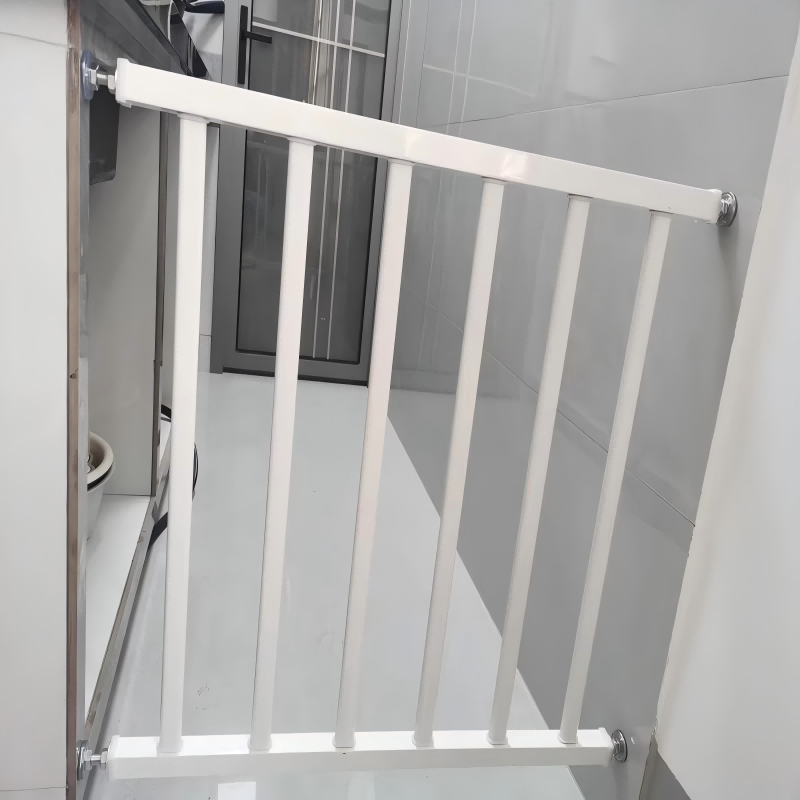
Safety Precautions for Window Guards, Including Railing Height, Weight, and Edge Guidance
Height Regulation
29 CFR 1910.29 states that window guard rails must be 42 inches in height +/- 3 inches. Window guard rails that are less than 42 inches, regardless of the height below the guard rails, are in violation of OSHA standards. This rule applies to multiple work environments, ranging from factories to storage to work balconies, and even temporary work environments such as construction site balconies. Rail height requirements are directly related to the construction of the building in which the work is taking place. This is in direct relation to OSHA's based statistics. OSHA's statistics state that falls from construction sites are one of the leading causes of fatalities in construction workplaces. Tight rail heights save lives of construction workers all across the country every single day.
Load Testing Requirements for the Top and Mid Rails
Each guard rail, including window guard rails, is obligated to meet certain load resistance criteria as dictated by OSHA. The criteria are as follows:
Top rails must meet a resistance of 200 pounds of downward and/or outward force within 2 inches from the edge of the rail.
Likewise, mid rails must meet a resistance of 150 pounds within the same described conditions.
These tests replicate true forces from leaning, incidental contact, or interaction with equipment. Meeting either of these thresholds greatly increases the risk of falling near unprotected openings in commercial and industrial facilities.
Critical Gap: How OSHA’s 4-Foot Unprotected Edge Rule Leaves Residential Windows Vulnerable
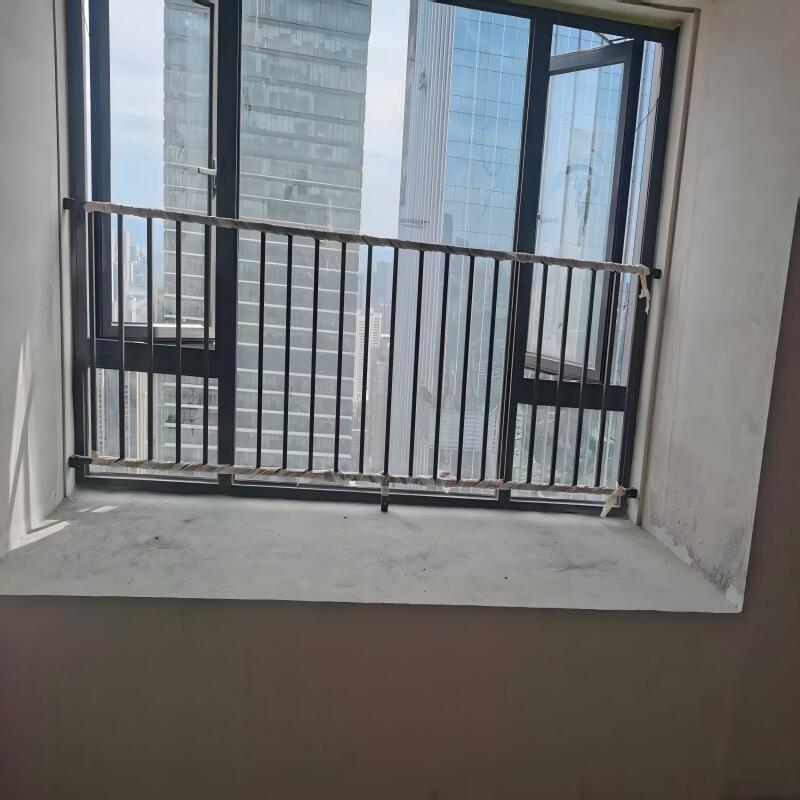
When it comes to guardrails, OSHA’s regulations come into effect only when there are unprotected edges that are 4 feet (48 inches) or more. Because of that, many residential windows go unregulated. Spaces such as basements, first-floor rooms, and other ground-level areas tend to fall below this threshold. windows, however, present an obvious and significant risk to children. In the United States, there are over 5000 children per year that suffer injuries from falling, while this is a tragic figure, children falling out of windows is and remains an even larger concern. While there are clearly no guidelines in residential construction, however, there is an obvious, clear and huge gap in construction guidelines. This, along with the lack of regulations in residential construction, provides an even bigger gap in the guidelines, leaving it completely up to local builders to "self-regulate" or to use some form of inventive safety measures to solve this issue.IBC Compliance for Window Guard Railing: Infill, Openings, and Material Integrity
4-Inch Sphere Rule to Prevent Child Entrapment and Egress
The International Building Code (IBC) requires child safety measures for every guardrail system, known as the 4-Inch Sphere Rule, to ensure that no gaps between any of the infill panels, decorative mesh, and any other components of the guardrail system are large enough to allow the passage of a four-inch ball. While this is intended for the safety of young children, the design must also incorporate provisions for the egress of any person. To ensure compliance, a contractor needs to conduct a test of each segment of the guardrail to evaluate the gaps against the established measurements. Special attention is paid to the corners, where gaps tend to be the most problematic during installation.
19 Inches Maximum Vertical Openings Between Sills, Midrails, and Decks
The IBC has dual purpose vertical dimensions, hinges and spacers, that are no greater than 19 inches to prevent children from climbing and falling. There are also other vertical dimensions that are also the same as the IBC vertical dimension that are also 19 inches to include between window sills, midrails, and whatever surface (deck or floor) they are connected to. Regardless of the type of guardrail, whether it is a main guardrail or just a single section, all guardrails must comply with all vertical dimensional requirements. Manufacturers and construction industry professionals must consider the slight differences in spacing to comply in the field fabrication of construction products and fully comply with the width and height (vertical) spacing requirements. Guardrail vertical dimensions, along with the 4 inch ball test (the gap cannot exceed 4 inches), vertical dimensions are designed to shield children from falling from high places.
Standards Related to Glass Window Guards: ASTM, ANSI, and Impact Testing
Glass that goes into window guard railings must meet certain structural and safety tests established in certain industry standards. Two of these standards are ASTM E2353, which looks at the performance of glass in guard systems, and 16 CFR 1201 Class A, which has federal impact resistance requirements. Both laminated and tempered glass meet these requirements, but they perform differently, so let’s unpack how the two types of glass perform in these standards in practice and in what situations they are best suited.
Laminated glass, which consists of two or more sheets of glass with a polyvinyl butyral (PVB) layer bonded to them, will maintain its structural integrity after an impact and remain in place, even if it breaks. It is the best at post-breakage containment. According to a 2022 Glass Association of North America report, laminated glass reduces the chance of a person falling through the glass by 78% compared to monolithic (single layer) glass.
On the other hand, tempered glass is heated glass that is 4 times as strong as regular (un-tempered) glass. It shatters into small pieces, which creates less risk of cuts if it is broken. However, it does not provide any safety barrier.
The materials must comply with the 400 foot-pound impact test as per 16 CFR 1201 Class A requirements. When considering the installation of materials over six feet above ground level, laminated glass is recommended as it is seen, by ASTM E2353, as the most effective way of managing the impact from above. Furthermore, it meets ANSI Z97.1 requirements on the maximum amount of glass that can break and come loose. When selecting materials for this project, remember to keep the safety and impact resistance certifications in mind as they indicate that the product meets the required standards and regulations.
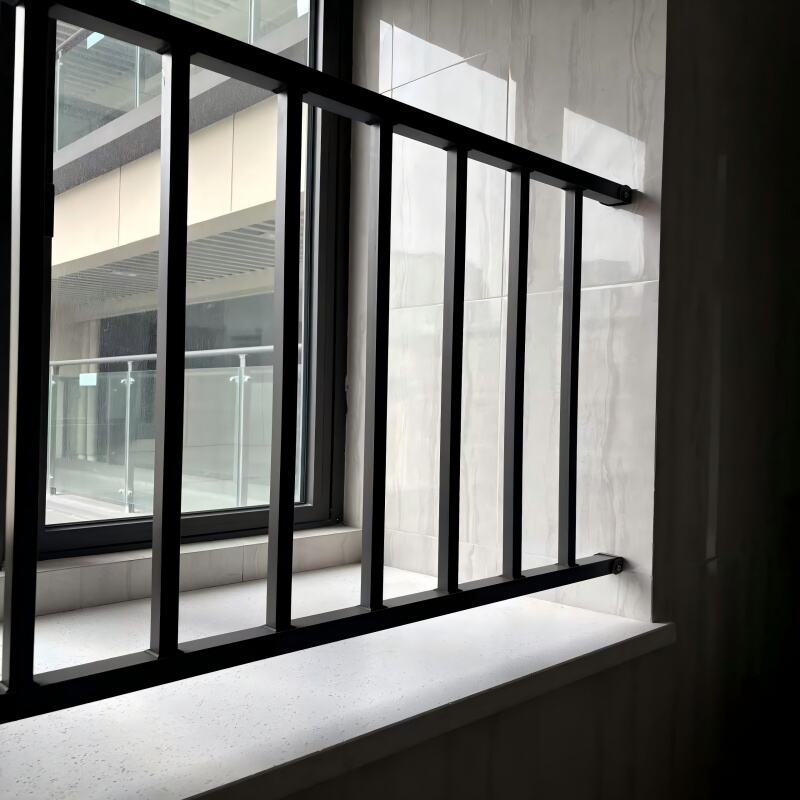
Functional Clarity: When Window Guard Railing Must Serve as Both Guardrail and Handrail
In most cases, window guard railings in multi-storey buildings also function as guardrails and handrails. The combination of guardrails and handrails means that these guard/hand rails must also meet a set of other, and in most cases, contradictory requirements.
Height: OSHA requirements state that guard rails must be a minimum of 42 inches. The IBC, on the other hand, states that handrails must be a maximum of 34-38 inches. These requirements must be carefully considered so that the safety and usability of the railings is not compromised.
Graspability & Strength: Handrails should have a round graspable section that's a minimum of 2 1/4 inches in diameter. For guardrails, the focus is on the ability to resist a 200-pound concentrated load. A hybrid approach to handrails and guardrails involves the use of a rounded and/or an ergonomically shaped top rail that is joined to a robust midrail, providing support for the top rail and midrail.
Edge Protection: Systems must prevent falls by not allowing a 4-inch sphere to pass through. Slips or trips must also be prevented at the walking surface, which requires careful attention to detail in the transitions, continuous surfaces, and the use of slip resistant coatings.
The successful integration of all of these functions depends on the architects, engineers, and code officials coordinating early in the project, as well as on the use of assemblies that have been tested and approved for single and dual use.
FAQ
What is the minimum height requirement for the guard railing of a window as per OSHA?
The guard railing at the window must be a minimum of 42 inches from the floor that it protects, plus or minus 3 inches, as per OSHA regulations.
What is the guardrail load requirement per OSHA?
According to OSHA regulations, the top rails must be able to withstand a load of 200 pounds, and the midrails must be able to withstand a load of 150 pounds.
Why are some residential windows not up to OSHA standards?
Residential windows are not up to OSHA standards for most residential windows as OSHA standards do not apply to windows as they do not cover areas that fall less than four feet.
What is the four-inch sphere rule that is applicable under the International Building Code?
The rule that is applicable The four-inch sphere rule is to prevent child entrapment. It requires that any space that exists between the vertical slats or balusters of a guardrail, frameless glass, or barrier system, as well as the space between the vertical slats and the bottom of the guardrail, is not large enough to allow a four-inch sphere to pass.