Railway guardrails are an important part of railway infrastructure support because it protects the other components of the system while also ensuring the safety of passengers and cargo trains, as well as protecting the surroundings. Metalguardrails develops and sells successful railway guardrails for various railway scenarios. the guardrail has a number of purposes and provides solutions to the many challenges that arise while running a train.
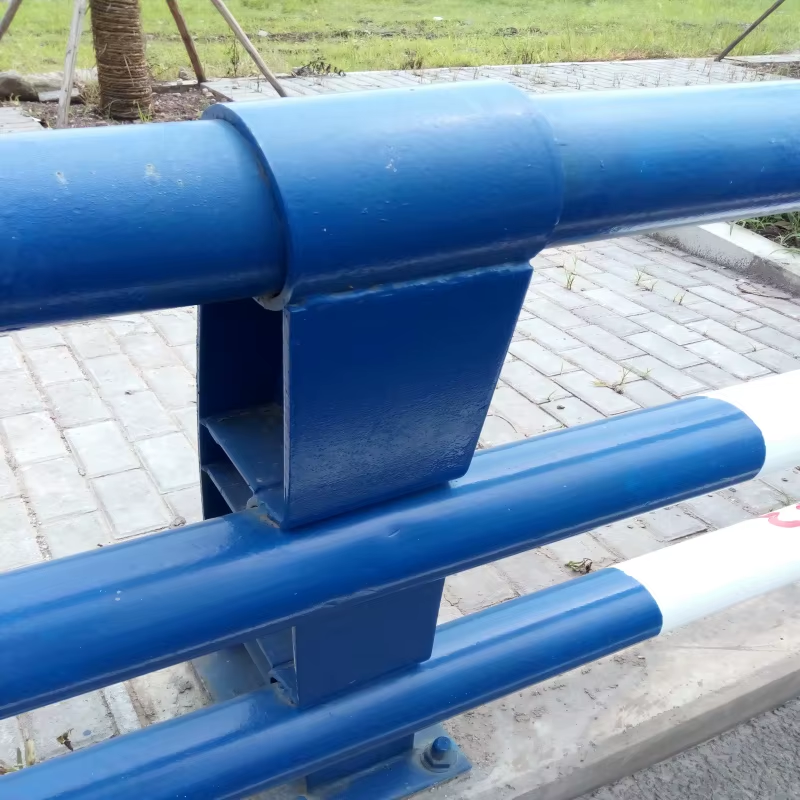
The most important function of a railway guardrail is to stop a train from derailing and lowering the severity of an impact. Under some circumstances, a train might lose its stability for a number of reasons including track faults, some weather conditions, or an emergency stop. Metalguardrails’ railway guardrail is positioned at the sides of railway tracks and has a strong structure built out of steel to control wheel movement. When a train is suspected of derailing, the guardrail prevents the train wheels to not slip off the track. It also guides the wheels to the right position. This not only prevents a major derailment, but also lowers the impact during an accident which is highly beneficial the individuals onboard as well as the cargo.
Railways frequently cut through residential areas, agricultural land, and even areas where animals or wildlife exist, where there is the potential for people, animals, or other debris to wander onto the tracks – threatening, and potentially causing, a disaster for any approaching trains. Metalguardrails’ railway guardrails are designed with the proper height and density to restrict unfettered access. For example, at the boundary of a road and a railway, the railway guardrail stops cars from veering onto the tracks, and in the countryside, it fences livestock away. This function of railway guardrails removes the possible risk of collisions, and hence the track can be utilized without any obstructions during train operations.
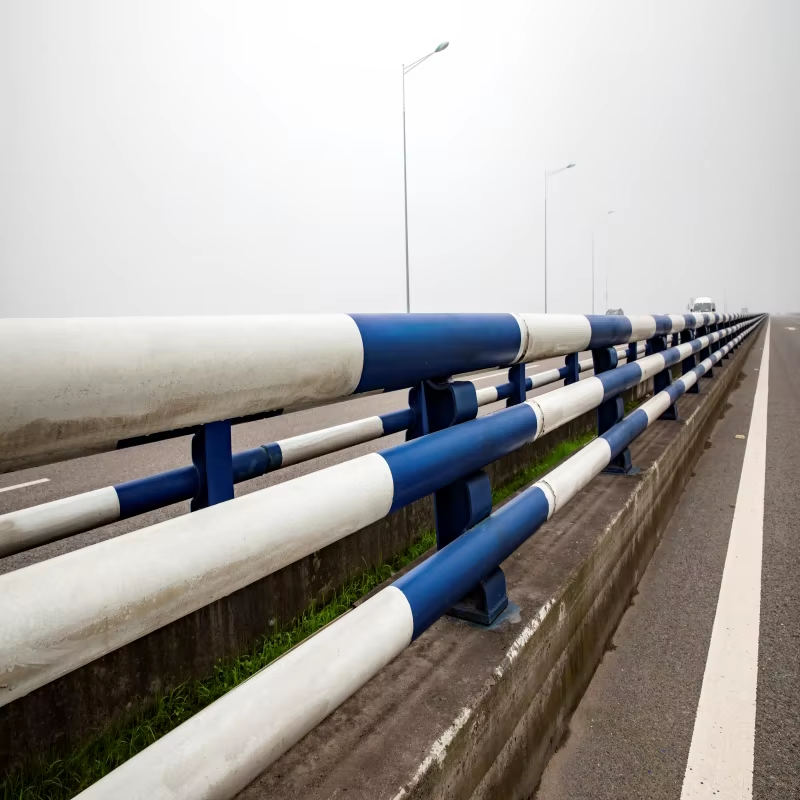
Railway Guardrails Prevents Damage to the Railway Tracks and other key Railway infrastructure Newly constructed railway guardrails are designed to protect vital railway pieces of infrastructure, such as the protective signalling systems, the mechanical switches, and the over-train electrification equipment. These components are absolutely necessary to controlling the train, yet equally fragile to the probing hits from random vehicles or descending objects. Metalguardrails’ railway guardrails are built around the crucial infrastructure facilities acting as a first line of defense. In situations where a train car derails, or a tree is felled onto the tracks, it is the railway guardrails that impact the train first, protecting the sensitive signalling parts or mechanical switches. This ensures that the functioning systems of the railway can operate at optimum, without the downtime needed to repair such infrastructure.
Bulk material like coal, containers, or other hazardous materials may shift while the train is moving, particularly when it makes turns or stops abruptly. Metalguardrails offers specialized cargo train rail guard guardrails which consist of side barriers, and end guards. These rail freight guard components will hold the cargo securely, preventing it from dropping off of the car, the onto the train tracks. This minimizes the likelihood of blockage or delays in the tracks, and the likelihood of hazardous materials falling into the surroundings, which can be detrimental to the environment or the people.
Conclusion
The Metalguardrails’ railway guard rail products optimally fulfill these functions with professional designing and premium material, becoming indispensable components of railway safety systems, which enables them to serve for the enhanced stability and safety of the railroads. Metalguardrails’ railway guardrail products optimally fulfill these functions with professional designing and premium material, becoming indispensable components of railway safety systems. For railway guardrails to be effective, their proper installation and use is paramount.
Copyright © 2025 by Chongqing Zhengda Steel Structure Co., Ltd. - Privacy policy

 EN
EN