A balcony railing isn’t just finishing touch of a building, but also a very important safety barrier border that prevents falls and keeps little kids, older folks, and pets safe from falling over. The safety of everyone using a balcony is affected by the height of the balcony railing, so the right adjustable height option is important. Metal Guard Rails (https://www.metalguardrails.com/) is one of the leading designers of railing solutions that balances safety, aesthetics and functionality. The following is a thorough explanation of the safe height dependent on the adjustable height railing along with the influencers.
For the first step, the reference to measures that range from global to local standards that are set to minimize fall risk is very important when calculating adjustable height standards. Safe height standards are set to ensure consistency across balconies. In most countries, the safe height standard for residential balcony railings is set to a minimum of 110 cm (43 inches). Commercial structures, including hotels, apartments, and offices, typically have a public balcony and the standard is set higher to 120 cm (47 inches) for public access and to cater to diverse groups.
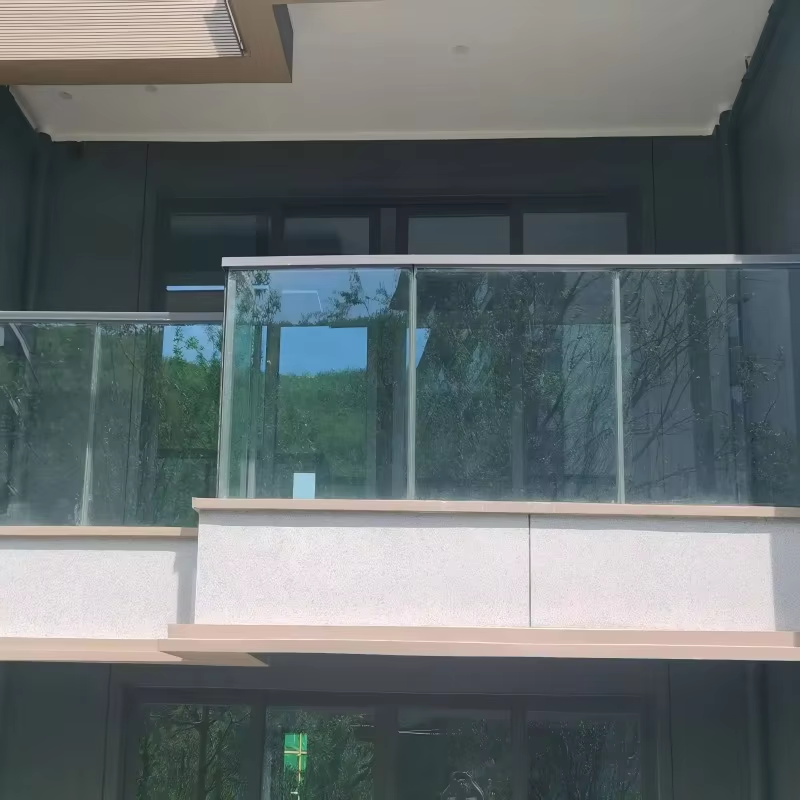
Agencies such as the International Code Council (ICC) and European Committee for Standardization (CEN) make sure standards are upheld for fences, and quality companies such as Metalguardrails go beyond these standards for each balcony railing they make. As an example, a Metalguardrails balcony railing for residential use has a height of 115 cm, which is slightly above the minimum. Adhering to standards is vital because ignoring them is a safety risk and can lead to legal non-compliance.
Balconies on the higher levels, above the second story, have a greater risk of falls and require taller balcony railings. Although the basic standard is 110 cm, most safety professionals and local regulations advise increasing the height of the balcony railing by 5 to 10 cm for each additional floor above the third. For example, a 5th floor balcony would use a 120 cm tall railing, and a 10th floor balcony would use a 130 cm tall railing.
This is taken into account faster winds at higher heights which might cause leaning towards the railing and the railing at the edge of a balcony which might cause a person to fall. Height customization to accommodate these factors is offered by Metalguardrails. Opting to increase the size of the balcony railing is a good choice.
Adjusting the Height of the Balcony Railing
The standard height of a balcony railing can be adjusted due to the need of child safety. Removing the standard height does not increase safety. Kids are curious and may try and climb the railing. For homes with children under the age of five, increasing the standard height by at least 10-15 cm, to a total of 120-125 cm, is common practice. Spacer rods in the railing must also meet safety standards, which is no vertically more than 10 cm, to avoid a child getting stuck or squeezing through. Metalguardrails creates child safe balcony railing by narrowing baluster spacing with height extensions, for peace of mind to parents. For instance, a family home with safety in mind may have it's balcony railing at 125 cm tall with 8 cm baluster gaps.
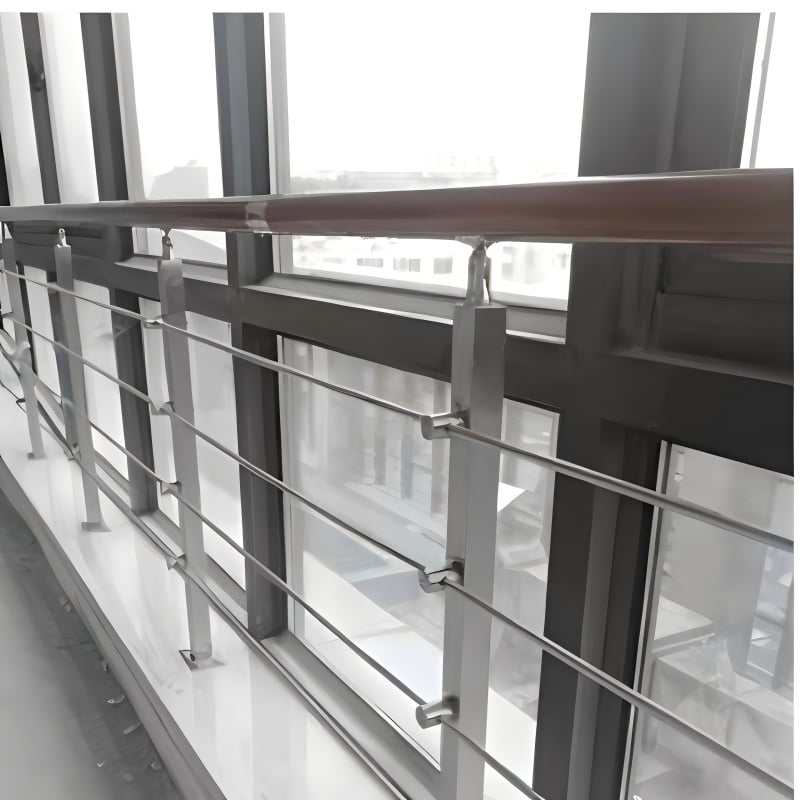
When deciding how high to build balcony railings, taking child safety into account is very important in homes.
The safety effect of a balcony railing design and material also plays a role. People may perceive balcony railings to be less secure, and, at the standard height become more likely to lean on lightweight and thin materials, like aluminum. On the other hand, materials with stronger metals, like high-grade steel, will make balcony railings more secure and stable, making standard heights more effective. Design also plays a role in safety. A railing with a smooth, unsharpened top will discourage climbing, and fall risks are also reduced with non-climbable balusters, even if the railing is at minimum height. A more effective design with safety in mind for a 110 cm metal balcony railing would be to have a curved top rail that discourages climbing, thick balusters, and smooth surfaces as opposed to a wooden design with protruding and climbing parts. Choosing the height of the balcony railing ensures safety when combined with durable materials and thoughtful design.
Local building codes often specify adjustments to the height of balcony railings based on regional climate, building type, and cultural factors, even if global standards provide a minimum height. These adjustments become the local standard.
For instance, coastal regions may need higher balcony railing (120 cm minimum) to withstand powerful ocean winds, whereas regions prone to earthquakes may need to have height restrictions so the balcony railing does not break during an earthquake. Local laws regarding balcony railing height should always be checked before construction to avoid fines and reinstallation. Metalguardrails focuses on understanding clients and local laws so balcony railings are supplied compliant to local laws. For example, a coastal city balcony railing would be 120 cm and have wind resistant fasteners, while one in the plains could follow the 110 cm rule. Meeting local laws means the balcony railings are safe.
Conclusion
Balcony Railings should be 110 cm for residential and 120 cm for commercial buildings, but more adjustments are usually required for high floors, for child safety, and local laws. Metalguardrails provides expertise in compliant durable balcony railings so builders, homeowners, and property managers are able to identify and decide what the right height for the railing is to meet their needs.
Balcony railings need to consider global standards and local rules, plus specifics to users like children and users of high-floor apartments. For the best building aesthetics, choose safe balcony railing heights. Designing secure outdoor spaces starts with the right balcony railing height.
Copyright © 2025 by Chongqing Zhengda Steel Structure Co., Ltd. - Privacy policy

 EN
EN