On the perimeter protection systems and road safety, the intelligent guardrail presents a revolutionary first line of safety. Active hazard sensing guardrails, are far superior to the traditional lay passive safety barriers. The detection and warning systems that intelligent guard rails use are critical to the safety upkeep of urban planners, safety infrastructure and traffic management systems. This hazard detection systems turn a passive safety guardrail into a proactive emergency warning and response unit. There will be no need to question the avoidance of accidents that the systems integrated with smart city systems. This makes the guardrail a must have in the modern integrated safety smart city systems.
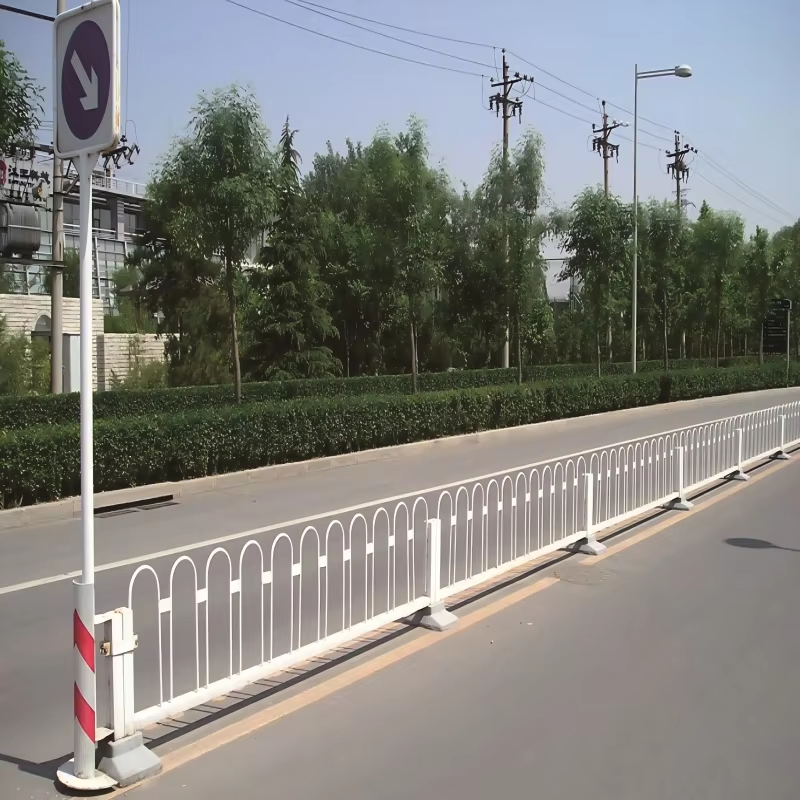
An intelligent guardrail employs advanced safeguards to detect obstacles accurately. There are different safeguards to detect different obstacles depending on different events and different environmental conditions. A major technology is infrared signaling, which allows the intelligent guardrail to detect vehicles, people, and animals even in the dark or difficult weather by sensing their heat. Ultrasonic technology also serves an important purpose. It sends out high-frequency sound waves, and then listens for echoes to figure out the obstacles and their distance to the intelligent guardrail. In advanced models, radar technology is an added feature that detects objects that are rapidly moving and extends the guardrail’s detection range. Application of this range of technologies means that intelligent guardrails monitor without any blind spots.
Unlike traditional guardrails, the intelligent guardrail can scan the environment, process the information, analyze the data, and detect obstacles from a distance. The intelligent guardrail’s embedded sensors continuously transmit data to a proprietary microprocessor at built in intelligent guardrail’s center. The guardrail’s processor uses pre-programmed algorithms to detect and eliminate extraneous signals, classifying junk signals like blowing leaves and little debris from determining threats like a vehicle going off the road and a pedestrian illegally crossing a restricted zone. The algorithms are designed to handle different climates and even adjust sensitivity during rains, fog, and windy conditions to reduce false alerts. Because of this predictive processing, intelligent guardrails are careful to avoid alerts in calm conditions, making alerts during genuinely risky situations more trustworthy.
After identifying an obstacle, intelligent guardrails begin their response procedures. Situations differ and the response varies depending on the hazard. When it is a minor hazard like stray animals, the guardrails only activate local warning lights. More critical responses are for vehicles approaching the guardrails at high speeds. Traffic control centers are notified, and automated roadside warning signs are activated. Even vehicles connected to the system are instructed to slow down rapidly. Some guardrail systems have fully automated emergency response systems, allowing them to call emergency services when a vehicle collision occurs. These advanced systems diminish the response time and maximize the safety benefits.
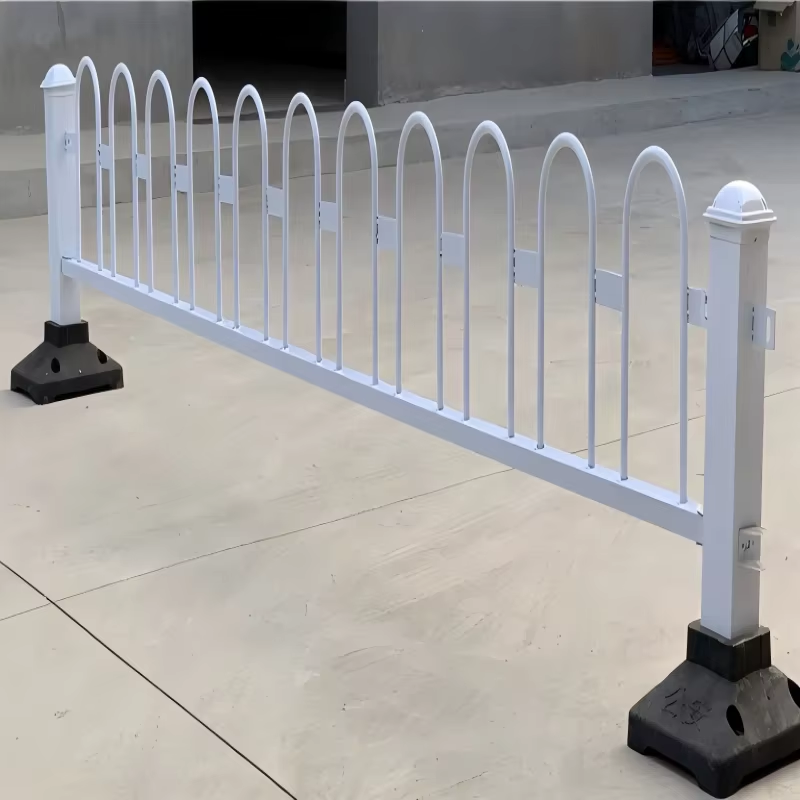
Environmental adaptability is one of the most important features of an intelligent guardrail. It allows the intelligent guardrail to adjust to various circumstances and retain consistent obstacle detection. Unlike the traditional detection systems that work poorly in heavy rain, thick fog, extreme temperatures, or dusty conditions, the intelligent guardrail is built to handle such conditions. The sensors are protected within weatherproof and dustproof housings that guard against physical damage and environmental interference. The system software is tuned to expect and adjust for different environmental conditions, such as cold weather, when infrared sensors are adjusted to avoid missing obstacles that emit heat. This feature ensures the intelligent guardrail is accurate and operational, whether on a busy highway, rural road, or the perimeter of an industrial facility.
As technological advancements continue, so do the increase in the the adaptability of intelligent guardrail systems. Implementing AI and Machine Learning in future smart guardrail systems will allow the systems to learn and strengthen the obstacle detection over time and learn to recognize new, unseen obstacles. Combined with advanced 5G mobile networks, the intelligent systems will communicate with other systems in real-time. In a developing smart city, systems will share information for real-time coordinated responses to threats and hazards. Buying a smart guardrail today is a safety infrastructure investment for the future, one that incorporates smart future technologies to cater to future demands.
Copyright © 2025 by Chongqing Zhengda Steel Structure Co., Ltd. - Privacy policy

 EN
EN